

INTRODUCTION
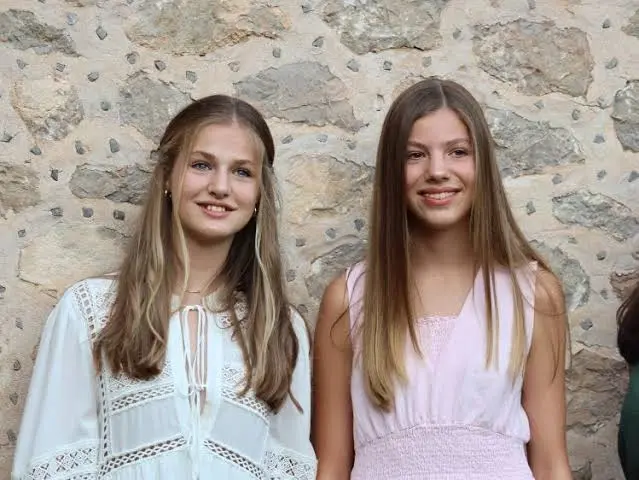
Princess Leonor of Asturias is the elder daughter of King Felipe VI and Queen Letizia of Spain, and she has one sibling, Infanta Sofía of Spain. Leonor was born in Madrid on October 31, 2005, while Sofía was born in the same city on April 29, 2007. The sisters have grown up together as the younger generation of the Spanish royal family, although their constitutional positions are different. (Casa Real)
Leonor is the heir to the Spanish crown and holds the title Princess of Asturias. Sofía is the younger daughter of the King and Queen and is known officially as Infanta Sofía. Their close age difference means they have shared many important family moments, from childhood appearances to major royal ceremonies and public engagements.
In 2026, both sisters are entering new stages of their lives. Leonor has completed her three-year military training and is moving toward university studies, while Sofía has continued developing her own educational and public path. The Spanish Royal Household has also featured the sisters together at several official events in 2026.
This guide explains who Princess Leonor’s sibling is, how the sisters grew up, what makes their roles different, and how their relationship fits into the future of the Spanish monarchy.
Princess Leonor Has One Sibling
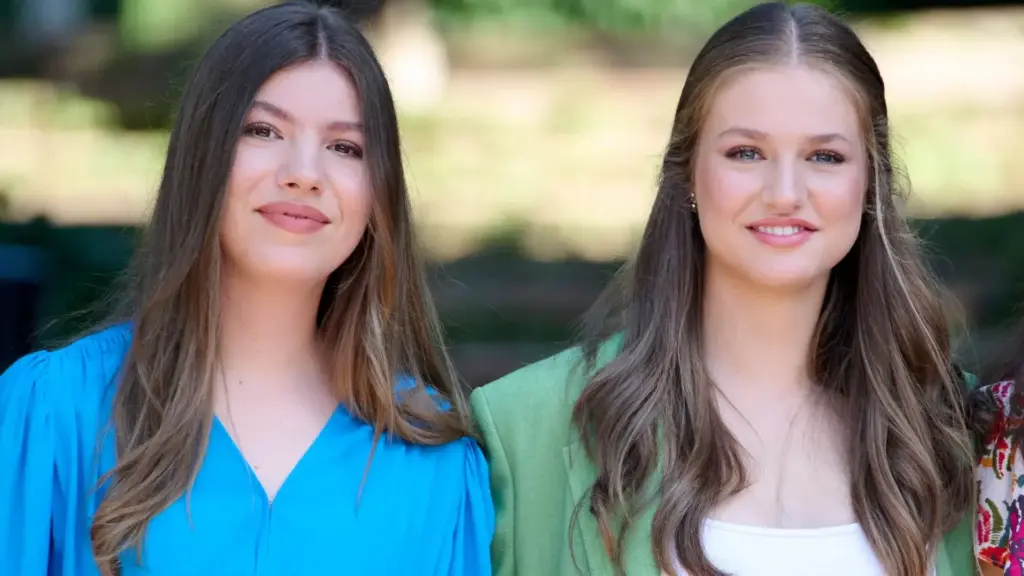
Princess Leonor has one sibling, her younger sister Infanta Sofía of Spain. Sofía is the second daughter of King Felipe VI and Queen Letizia. According to the official biography published by the Spanish Royal Household, she was born in Madrid on April 29, 2007.
Leonor was born approximately 18 months before Sofía, creating a relatively small age gap between the sisters. Their parents have generally kept their childhood private while allowing them to appear together at important national and family occasions.
The official Royal Household archive contains photographs of Leonor and Sofía together from childhood, including appearances at family events and school-related occasions.
Quick Facts About Princess Leonor’s Sibling
- Sibling: Infanta Sofía of Spain
- Full name: Sofía de Borbón y Ortiz
- Born: April 29, 2007
- Birthplace: Madrid, Spain
- Parents: King Felipe VI and Queen Letizia
- Older sister: Leonor, Princess of Asturias
- Position: Second daughter of the King and Queen
- Relationship: Younger sister of the heir to the Spanish Crown
- Royal title: Infanta of Spain
Unlike Leonor, Sofía does not hold the title Princess of Asturias because that title belongs to the heir to the crown.
Reference Table: Leonor and Sofía
| Detail | Princess Leonor | Infanta Sofía |
|---|---|---|
| Full name | Leonor de Borbón y Ortiz | Sofía de Borbón y Ortiz |
| Born | October 31, 2005 | April 29, 2007 |
| Birthplace | Madrid, Spain | Madrid, Spain |
| Parents | Felipe VI and Letizia | Felipe VI and Letizia |
| Sibling position | Elder daughter | Younger daughter |
| Royal title | Princess of Asturias | Infanta of Spain |
| Constitutional position | Heir to the Crown | Second in line after Leonor |
| Age in August 2026 | 20 | 19 |
| Future role | Queen of Spain | Supporting member of the Royal Family |
| Education | International and military training | International education |
The sisters’ different titles reflect their positions within the constitutional succession. Leonor became heir when Felipe VI was proclaimed king on June 19, 2014. The official biography states that she has held the dignity of Princess of Asturias since that date.
Who Is Infanta Sofía?
Infanta Sofía is the younger daughter of King Felipe VI and Queen Letizia. She was born almost two years after Leonor and grew up within the Spanish royal family at a time when her father was still Prince of Asturias. Her birth therefore occurred before Felipe became king in 2014.
The official Royal Household describes Sofía as the second daughter of the King and Queen.Her name, Sofía, also connects her to the Spanish royal family because her paternal grandmother is Queen Sofía, the wife of former King Juan Carlos I.
Although she does not have the constitutional role of heir, Sofía remains an important member of the royal family. Her public appearances have increased as she has grown older. In 2026, the Royal Household’s official activities included Leonor and Sofía together at several events, demonstrating that the younger sister continues to participate in selected public engagements.
Leonor’s and Sofía’s Age Difference
Princess Leonor and Infanta Sofía have an age difference of approximately 18 months. Leonor was born on October 31, 2005, while Sofía was born on April 29, 2007.
Because they are relatively close in age, the sisters spent much of their childhood growing up together. They attended family events together, appeared in official photographs, and were frequently seen alongside their parents.
The Royal Household’s photographic archive shows the sisters together at different stages of childhood, including family holidays, school-related moments, and official occasions.
Their age difference also means they entered major life stages relatively close together. Leonor reached adulthood first and began the formal constitutional and military preparation associated with the heir. Sofía followed her sister through many of the family’s public milestones while maintaining a less demanding official profile.
Leonor’s and Sofía’s Relationship
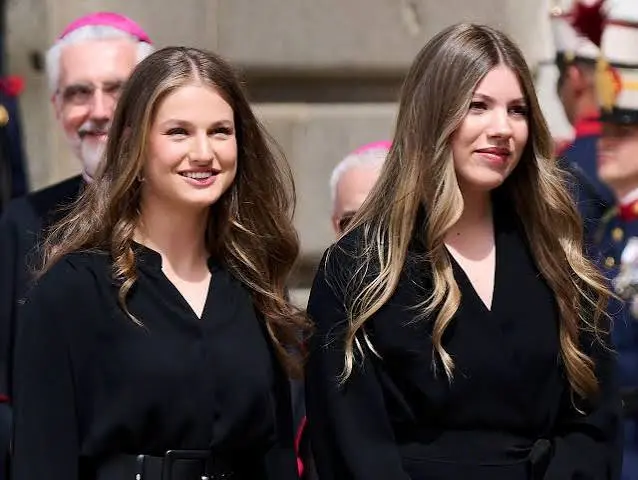
The sisters have spoken publicly about their relationship only occasionally, but Leonor has referred positively to Sofía in public remarks.
One particularly notable example appears on the official Royal Household website. In a 2020 speech, Leonor referred to what “my sister, Sofía, and I” had learnt from our parents about responsibility.
That comment provides a small but useful insight into how the sisters have been raised.
Their parents have emphasised responsibility and awareness of other people, values that are particularly important for a family with constitutional responsibilities.
The sisters have also appeared together during public events, including activities involving young people and educational organisations.
In July 2026, Leonor and Sofía took part in a meeting with young people with disabilities at Madrid’s Residencia de Estudiantes. The Royal Household also recorded them together at an audience with the Spanish committee of United World Colleges.
These appearances show that their relationship remains visible within the family’s public life.
How Their Royal Roles Are Different
The biggest difference between Leonor and Sofía is their constitutional position. Leonor is the heir to the Spanish Crown.
Sofía is the younger daughter of the monarch and does not have the same constitutional responsibilities. When Felipe VI became king in June 2014, Leonor automatically became the heir under the succession system. She received the title Princess of Asturias, traditionally associated with the heir to the Spanish throne.
This means Leonor is being prepared for a future as head of state. Sofía’s role is different. She can support her family and participate in official activities, but she is not being prepared to become monarch under the current succession arrangement.
Leonor’s Responsibilities Include
- Preparing for the constitutional responsibilities of the monarch.
- Receiving military education.
- Taking part in national ceremonies.
- Representing the Royal Family.
- Attending major institutional events.
- Developing diplomatic and public-speaking experience.
- Studying subjects relevant to her future role.
Sofía’s Role Is More Flexible
- Supporting the Royal Family at selected events.
- Developing her own education and interests.
- Taking part in charitable and social activities.
- Representing the family when appropriate.
- Maintaining a comparatively private life.
This distinction does not mean that Sofía is unimportant. It simply means that the sisters have different responsibilities because of their positions in the line of succession.
Where Does Infanta Sofía Stand in the Succession?
Under Spain’s constitutional succession system, Leonor is ahead of Sofía because she is the firstborn child of King Felipe VI and Queen Letizia. Sofía therefore follows her older sister in the line of succession.
This position could change only if the constitutional rules or family circumstances changed. For now, Leonor remains the heir to the Crown, while Sofía is the younger sister who follows her in succession. This makes the sisters’ relationship especially interesting from a constitutional perspective.
Leonor is being prepared to become queen, while Sofía is expected to support the institution in a different capacity. The arrangement is similar to other European royal families’, where the firstborn child inherits the throne and younger siblings occupy supporting positions.
Their Childhood in the Spanish Royal Family
Leonor and Sofía spent their childhood at a time when the Spanish monarchy was experiencing significant change. When they were young, their grandfather Juan Carlos I was king. Their father was then Prince of Asturias. In June 2014, Juan Carlos abdicated and Felipe VI became king. Leonor consequently became heir to the Crown. Sofía’s position also changed because she became the younger daughter of the reigning monarch.
The official Royal Household archive contains photographs from this period showing the sisters with their parents at family and public occasions. Their parents have generally tried to provide them with a childhood that balances royal expectations with privacy. That balance became more difficult as Leonor grew older and her constitutional role became more prominent.
Education: Two Sisters, Different Paths
Education has been an important part of both sisters’ development. Leonor attended school in Spain before studying at UWC Atlantic College in Wales. She later returned to Spain for military training and has moved toward university education.
Her path has been strongly shaped by her future role as monarch. Sofía also studied at UWC Atlantic College, giving the sisters an international educational experience.
The United World Colleges system brings students from different countries and backgrounds together, which can provide a broader perspective than a conventional national school environment.
This international experience is particularly useful for members of a royal family who may eventually interact with foreign governments, institutions, and communities.
The Spanish Royal Household continues to highlight its relationship with United World Colleges. In July 2026, Leonor and Sofía attended an audience with the Spanish committee of the organisation.
For more background about Leonor’s personal life, financial situation, education, and preparation for the throne, readers can also visit our Princess Leonor net worth and age guide.
This provides a natural internal connection between the two related royal-family topics.
Sofía’s Life in 2026
By 2026, Infanta Sofía has reached adulthood. She turned 19 on April 29, 2026, while Leonor is 20.
The Spanish Royal Household has increasingly included Sofía in selected official activities, but she continues to maintain a lower public profile than her older sister.
That difference is intentional and understandable. Leonor’s position requires extensive public preparation because she is expected to become Spain’s next monarch. Sofía does not face the same constitutional demands.
In July 2026, Sofía participated in public events alongside Leonor, including a meeting with young people with disabilities and an audience involving United World Colleges.
These appearances demonstrate that her role can expand when appropriate while remaining distinct from her sister’s.
Are Leonor and Sofía Close?
Public information suggests that the sisters have maintained a close family relationship. Leonor has spoken about Sofía positively, and the sisters continue to appear together at family and official events.
Their relationship is also visible in the Royal Household’s official archive, which contains numerous photographs of them together from childhood through their teenage years.
However, it is important not to overinterpret limited public appearances. Like many members of royal families, Leonor and Sofía do not share every detail of their private lives.
What can reasonably be said is that they have grown up together, have participated in important family occasions together, and continue to undertake selected public activities as sisters.
Princess Leonor’s Future as Queen and Sofía’s Role
Leonor’s future is much more clearly defined than Sofía’s. As heir, she is expected eventually to succeed Felipe VI as Queen of Spain. Her preparation has already included education, military training, constitutional duties, public speaking, and official representation. Sofía’s future is more open-ended.
She may continue supporting the monarchy through public engagements, charitable work, cultural activities, and representation. However, she has greater freedom to develop a career or professional interest outside the central responsibilities of the Crown. This difference could become even more visible as the sisters move through their twenties.
Leonor will increasingly be expected to take on duties traditionally performed by a future monarch. Sofía can develop her own interests while remaining a member of the Royal Family.
What Both Sisters Have in Common
Despite their different roles, Leonor and Sofía share several important characteristics:
- They are daughters of King Felipe VI and Queen Letizia.
- They were both born in Madrid.
- They were raised within the Spanish royal family.
- They received international educational experience.
- They participate in selected public engagements.
- They have represented the family together.
- They have grown up with an understanding of constitutional responsibility.
Their paths are different, but their family connection remains an important part of the modern Spanish monarchy.
Princess Leonor’s Sibling and the Future of Spain
The relationship between Leonor and Sofía is also important because of what it represents for the future of the Spanish monarchy. Leonor is expected to become Spain’s first queen regnant since Isabella II, who ruled during the 19th century.
Sofía, meanwhile, represents the supporting generation around the future monarch. As Leonor takes on more responsibility, Sofía may become an increasingly valuable member of the royal family.
Her role could include attending ceremonies, supporting charitable causes, representing the monarchy at selected events, or accompanying Leonor on public occasions.
The precise shape of that role will develop over time. The Royal Household has already demonstrated that Sofía can participate independently in public activities while also appearing alongside her sister. The 2026 calendar provides several examples.
Frequently Asked Questions
How many siblings does Princess Leonor have?
Princess Leonor has one sibling, her younger sister Infanta Sofía of Spain.
Who is Princess Leonor’s sister?
Her sister is Infanta Sofía de Borbón y Ortiz, the younger daughter of King Felipe VI and Queen Letizia. She was born in Madrid on April 29, 2007.
How old is Infanta Sofía in 2026?
Infanta Sofía is 19 years old in 2026. She celebrated her 19th birthday on April 29, 2026.
How much older is Leonor than Sofía?
Leonor is approximately 18 months older than Sofía. Leonor was born October 31, 2005, and Sofía was born April 29, 2007.
Is Infanta Sofía the heir to the Spanish throne?
No. Leonor is the heir to the Crown. Sofía is the younger sister and follows Leonor in the succession under the current constitutional system.
Are Princess Leonor and Sofía close?
The sisters appear to maintain a close family relationship. Leonor has spoken publicly about Sofía, and they regularly appear together at selected official and family events.
Who are Princess Leonor and Sofía’s parents?
Their parents are King Felipe VI and Queen Letizia of Spain. The Royal Household confirms that they have two daughters, Leonor and Sofía.
What is Sofía’s title?
Her official title is Infanta Sofía of Spain. She is not the Princess of Asturias because that title belongs to the heir to the Spanish Crown.
Where was Infanta Sofía born?
Sofía was born in Madrid, Spain, on April 29, 2007.
Conclusion
Princess Leonor has one sibling, Infanta Sofía, her younger sister and the second daughter of King Felipe VI and Queen Letizia. Leonor was born in October 2005, while Sofía was born in April 2007, giving the sisters an age difference of about 18 months.
Although they grew up together and share many family experiences, their royal roles are quite different. Leonor is the heir to the Spanish Crown and has already completed extensive education, military training, and constitutional preparation for her future as queen.
Sofía has a less formal constitutional role. She follows her sister in the line of succession and can develop her own educational, professional, and personal interests while supporting the Spanish royal family when appropriate.
Their relationship remains one of the more interesting aspects of the younger generation of Spanish royalty. Official photographs and public appearances show the sisters together from childhood through adulthood, while Leonor has also spoken warmly about her younger sister.
In 2026, both sisters are entering important new stages. Leonor is moving from military preparation toward higher education and an increasingly demanding royal role, while Sofía continues to establish her own place within the family.
As the future Queen of Spain and her younger sister continue their respective paths, their relationship will remain an important part of the story of the modern Spanish monarchy.
References
- Spanish Royal Household: Princess Leonor Official Biography
- Spanish Royal Household: Infanta Sofía Official Biography
- Spanish Royal Household: Princess Leonor Official Page and Activities
- Spanish Royal Household: King Felipe VI Biography
- Spanish Constitution and Royal Succession Information
About the Author
About the Author: The Royals & Culture editorial team researches European royal families, history, education, public figures, and contemporary royal life. Our articles are written using publicly available information and reputable sources, with official royal sources prioritised for dates, titles, family relationships, and constitutional details. The goal is to provide readers with clear, useful, and balanced information while separating confirmed facts from speculation.
Internal Link
For readers who want to learn more about Leonor’s personal background, financial situation, education, and preparation for the throne, visit Princess Leonor Net Worth and Age: Her Royal Life in 2026.