

INTRODUCTION
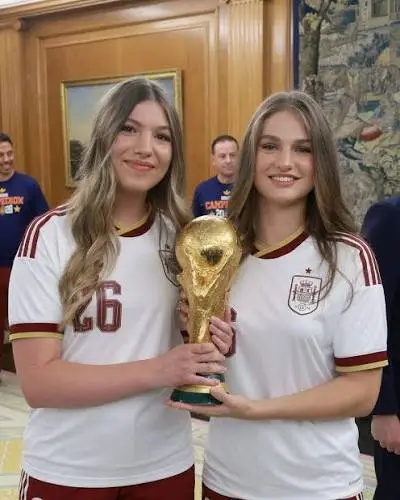
Infanta Sofía of Spain became part of one of the most memorable scenes of the 2026 FIFA World Cup when she lifted the World Cup trophy during Spain’s celebrations in New Jersey. The moment came after Spain defeated Argentina 1–0 in the final, securing the country’s second men’s World Cup title.
Sofía was joined by her older sister, Princess Leonor, King Felipe VI, and Queen Letizia as they celebrated alongside the Spanish players. The image quickly attracted international attention because it connected the young royal’s present-day life with a similar moment from 2010, when she and Leonor were children celebrating Spain’s first World Cup victory.
Sofia Lifts the World Cup Trophy in 2026
The celebration took place after Spain’s historic victory.
Spain defeated Argentina 1–0 in the 2026 FIFA World Cup final at the New York-New Jersey Stadium in East Rutherford, New Jersey. The match was decided in extra time, with Ferran Torres scoring the winning goal in the 106th minute.
After the final whistle, the Spanish players began celebrating their historic victory. The Spanish royal family also joined the celebrations on the pitch.
Princess Leonor and Infanta Sofía were both present with their parents. During the trophy celebrations, Sofía was photographed lifting the famous World Cup trophy while Leonor and Spanish players watched nearby. Getty Images identified the moment as part of the award ceremony following Spain’s victory.
The scene gave fans a rare opportunity to see the Spanish royal family celebrating a major sporting achievement alongside the national team.
Sofía celebrated alongside Princess Leonor
Sofía did not experience the moment alone. Her sister Leonor was beside her during the celebrations, making the occasion an important family memory as well as a national celebration.
The sisters have shared many public appearances throughout their lives, but the World Cup has a particularly special connection to them. Their relationship with the tournament goes back to Spain’s victory in 2010.
Sixteen years later, the sisters were once again connected to the World Cup trophy, but this time as young adults standing on the pitch after another Spanish victory.
The 2026 World Cup Final
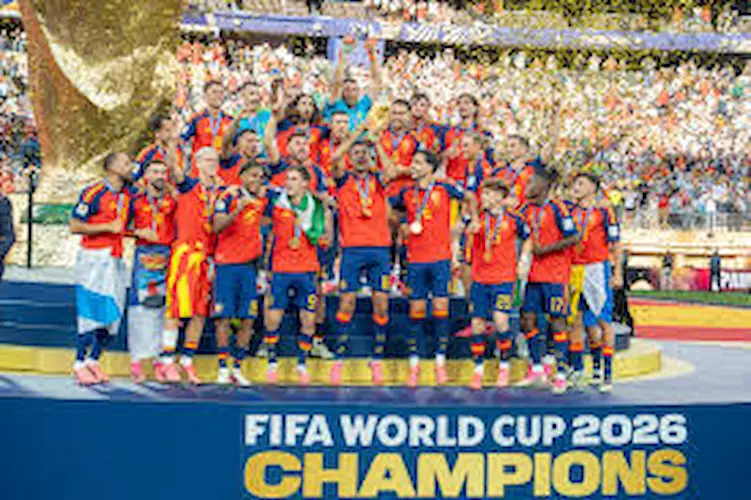
Spain defeated Argentina 1–0.
The final between Spain and Argentina was one of the biggest sporting events of 2026. Spain eventually won the match 1–0 after extra time.
Ferran Torres scored the decisive goal in the 106th minute, giving Spain its second men’s FIFA World Cup title. The result came 16 years after Spain won its first World Cup in South Africa in 2010.
For the Spanish royal family, attending the final was a major public moment. King Felipe VI, Queen Letizia, Princess Leonor, and Infanta Sofía were all present at the stadium to support Spain.
After the match, the family joined the players on the field to celebrate.
The royal family showed its support for La Roja.
The presence of the Spanish royals added another layer of significance to the final.
King Felipe VI and Queen Letizia have regularly supported Spanish athletes and national teams, while Leonor and Sofía have increasingly taken part in major public events representing the royal family.
At the World Cup final, the family appeared in Spain’s national colours and celebrated enthusiastically with the players after the victory. Reports described Leonor and Sofía as visibly excited during the trophy celebrations.
Their appearance also demonstrated how closely major sporting events can connect the Spanish royal family with the wider public.
Sofia and the World Cup Trophy: A Full-Circle Moment
The connection began in 2010.
The most touching part of Sofía’s 2026 World Cup moment is its connection to the 2010 tournament.
When Spain won its first FIFA World Cup in 2010, Leonor and Sofía were still very young. After the team returned home, the royal family welcomed the players at the Zarzuela Palace.
The young sisters were photographed with the famous trophy during the celebrations. At the time, Leonor was four years old and Sofía was three. Their childhood interaction with the trophy became one of the memorable images associated with Spain’s first World Cup victory.
Sixteen years later, the sisters found themselves celebrating another Spanish World Cup triumph.
From childhood memories to an adult celebration
The difference between the two moments is striking.
In 2010, Leonor and Sofía were children surrounded by their parents and Spanish football stars. In 2026, they were adults attending the biggest football tournament in the world and taking part in the celebrations themselves.
That change made the 2026 trophy moment especially meaningful for royal watchers.
Photos of the sisters with the trophy in both years created a natural before-and-after story. What began as a childhood memory became a new chapter in their lives as members of the Spanish royal family.
Why Sofia’s Trophy Moment Became So Popular
The image combined football and royalty.
The photograph of Sofía lifting the World Cup trophy attracted attention because it brought together two subjects that already have enormous international audiences: football and the Spanish royal family.
The 2026 World Cup was already a historic tournament for Spain. The team’s victory over Argentina created celebrations across the country, while the presence of the royal family added a familiar national symbol to the event.
Images showed Sofía with the trophy while Leonor and Spanish players stood nearby. Getty Images documented Sofía lifting the trophy during the award ceremony, with Lamine Yamal also visible in the scene.
The sisters’ story made the moment even more special.
The image would have been memorable on its own, but the connection to 2010 made it far more interesting.
The sisters had already been photographed around the World Cup trophy as children. Seeing them return to another World Cup celebration 16 years later gave the moment a sense of continuity.
Several international reports highlighted this connection, describing the 2026 celebration as a reunion with the trophy after the sisters’ childhood appearance following Spain’s first title.
Infanta Sofía’s Role in the Spanish Royal Family
Sofía is the younger daughter of King Felipe VI and Queen Letizia.
Infanta Sofía is the younger daughter of King Felipe VI and Queen Letizia. Her older sister, Princess Leonor, is the heir to the Spanish throne.
Although Sofía does not hold the same constitutional position as her sister, she remains an important member of the Spanish royal family.
Her public appearances have increased as she has grown older. She has attended national celebrations, official events, sporting occasions, and international engagements alongside her family.
The World Cup final was one of the largest global events at which she appeared in 2026.
Her public image is different from Leonor’s.
Leonor’s role is closely connected to her future position as queen. Her education, military training, and public responsibilities receive significant attention.
Sofía has a different position within the family. She is not the heir, allowing her public role to develop differently.
The World Cup celebration offered a more relaxed glimpse of Sofía. Rather than appearing at a formal state ceremony, she was celebrating a sporting victory with her family and Spain’s football team.
Spain’s Second World Cup Triumph
The 2026 victory came 16 years after the first
Spain’s first men’s FIFA World Cup title came in 2010. The team defeated the Netherlands in the final in Johannesburg, with Andrés Iniesta scoring the decisive goal.
The second title arrived in 2026 after Spain defeated Argentina in extra time.
The victory therefore created an unusual connection between two generations of Spanish football fans. For older supporters, it recalled the historic 2010 team. For younger fans, including Sofía’s generation, the 2026 triumph created a new national memory.
The Spanish royal family’s involvement connected both eras even more clearly.
The trophy celebration continued in Spain.
The celebrations did not end at the stadium.
After returning to Spain, the national team and officials presented the FIFA World Cup trophy at the Zarzuela Palace and later at the Moncloa Palace. The Royal Spanish Football Federation confirmed that the royal family welcomed the World Cup champions after their return to Madrid.
The trophy was also displayed publicly in Madrid as celebrations continued.
For Sofía and Leonor, the return home meant another opportunity to celebrate the team’s achievement with the players and supporters.
The Meaning Behind Sofia Lifting the Trophy
It was more than a football photograph
Sofía lifting the World Cup trophy was not simply another celebration photograph.
It represented a rare meeting point between her family history, Spanish sporting history, and her own transition from childhood to adulthood.
In 2010, she was a toddler watching her country celebrate its first World Cup. In 2026, she was an adult standing on the pitch after Spain had won the trophy again.
That contrast gives the photograph a story that goes beyond the result of a single football match.
A memorable moment for the Spanish royal family
The 2026 World Cup victory became an important moment for the entire Spanish royal family.
King Felipe VI and Queen Letizia watched the final alongside their daughters before joining the players on the field. The royal family’s presence reflected the national importance of the tournament and Spain’s eventual victory.
For Sofía, however, the moment was particularly memorable because she became one of the recognisable faces in the celebration.
Her image with the trophy gave royal followers and football fans a powerful visual reminder of how much had changed since 2010.
Sofia Lifts World Cup Trophy: Why Fans Will Remember It
The 2026 image created a perfect royal-sporting memory.
The photograph of Sofía lifting the World Cup trophy captures several important elements at once.
It shows Spain celebrating its second World Cup title. It shows the Spanish royal family supporting the national team. It shows Sofía and Leonor taking part in a historic national occasion. Most importantly, it connects the sisters’ childhood memories from 2010 with their adult lives in 2026.
That is why the moment attracted so much attention internationally.
Sofía’s appearance was not about claiming the trophy as her own. The trophy belonged to Spain’s victorious football team. Instead, her participation represented the joy of a member of the Spanish royal family celebrating alongside the country’s champions.
Conclusion
Infanta Sofía’s World Cup trophy moment became one of the standout royal images of Spain’s 2026 football triumph. After Spain defeated Argentina 1–0 in extra time, Sofía joined Princess Leonor, King Felipe VI, Queen Letizia, and the Spanish players on the pitch.
The moment became even more meaningful because Sofía and Leonor had been photographed with the World Cup trophy as young children after Spain’s 2010 victory. Sixteen years later, they returned to the same celebration as adults.
For Spanish football fans, the image represents a new chapter in the country’s sporting history. For royal watchers, it offers a rare and joyful glimpse of Sofía taking part in a major national celebration. Most importantly, it shows how one trophy connected two generations of the Spanish royal family’s memories, turning a football victory into a lasting family moment.

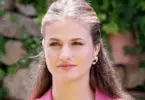



[…] For readers following the wider royal reaction to Spain’s World Cup win, our earlier coverage of Infanta Sofia’s role in the celebrations offers additional context: Sofia Lifts World Cup Trophy: A Historic Royal Moment. […]