
On the night of 19 July 2026, football history and royal history collided at MetLife Stadium in East Rutherford, New Jersey. Spain defeated defending champions Argentina 1-0 after extra time to win the FIFA World Cup for the second time, and among the players celebrating on the pitch stood two unmistakable faces from the Spanish royal family: Princess Leonor, heir to the Spanish throne, and her younger sister, Infanta Sofia. Their appearance beside the trophy was not just a photo opportunity. It closed a sixteen-year circle that began when the sisters were toddlers celebrating Spain’s first World Cup win in 2010.
This article looks at exactly what happened on the pitch, why the image of Leonor lifting the World Cup trophy resonated so widely, and what the moment says about the modern Spanish monarchy’s relationship with its people.
Spain’s Extra-Time Triumph Over Argentina
The 2026 FIFA World Cup final was a tense, tightly fought contest. Spain dominated possession for most of the ninety minutes but could not find a breakthrough against a well-organised Argentina defence marshalled by Emiliano Martinez. The match went goalless into extra time, and it was substitute Ferran Torres who eventually settled the contest, scoring the decisive goal in the 106th minute. Argentina, already reduced to ten men after Enzo Fernandez was sent off, could not find a way back into the game.
Key facts from the final include:
- Final score: Spain 1-0 Argentina (after extra time)
- Venue: MetLife Stadium, East Rutherford, New Jersey
- Winning goal: Ferran Torres, 106th minute
- Significance: Spain’s second World Cup title, first since 2010
- Notable record: Spain became the first nation to hold both the men’s and women’s World Cup titles at the same time
The win ended Argentina’s bid to become the first team since Brazil in the early 1960s to defend the World Cup, and it gave Spain a second star above its national crest, sixteen years after the country’s maiden triumph in South Africa.
The 2026 tournament itself was historic on several counts. It was the first World Cup to feature 48 teams and the first jointly hosted by three nations: Canada, the United States and Mexico. Spain reached the final unbeaten, defeating France 2-0 in the semi-final, while Argentina edged past England 2-1 in the other last-four tie. In the third-place play-off, England beat France 6-4 in one of the highest-scoring matches in World Cup history, with Bukayo Saka scoring a hat-trick. Against that backdrop, Spain’s disciplined, patient final performance stood out, with the team registering fifteen shots to Argentina’s none in normal time before finally breaking through in extra time.
For Lionel Messi and Argentina, the defeat brought an end to their hopes of a fourth World Cup and a first successful title defence since Brazil managed the feat in 1962. For Spain, it confirmed the country’s status as one of international football’s dominant modern forces, a status the royal family was visibly eager to celebrate alongside the players.
Princess Leonor and Infanta Sofia on the Pitch
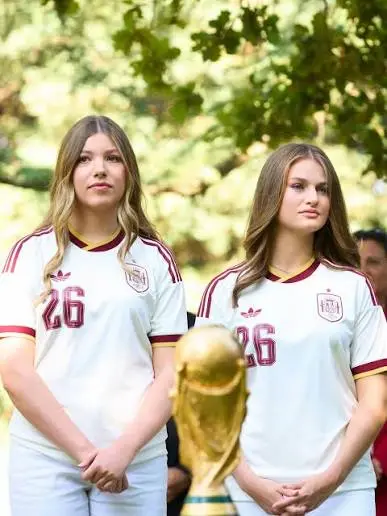
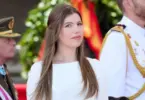
Once the final whistle blew, the celebrations spread far beyond the players. King Felipe VI, Queen Letizia, Princess Leonor and Infanta Sofia had watched the match from a VIP box, all dressed in shades of red in a visible show of support for the national team. As confetti filled the stadium, the royal family made their way onto the pitch to join the squad.
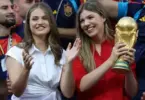
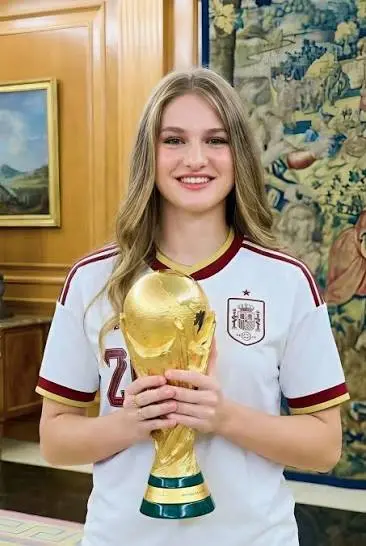
Leonor, 20, and the future Queen of Spain, and Sofia, 19, were seen laughing, embracing players and posing with the golden trophy alongside coach Luis de la Fuente and the wider coaching staff. Photographs and video clips of the sisters holding the trophy spread quickly across social media, generating conversation well beyond Spain’s borders. It was, by several accounts, the first time all four members of the immediate royal family had travelled together for an official overseas engagement, with security protocols reportedly requiring the King and Princess Leonor to fly on separate aircraft in line with standard succession safeguards.
Echoes of 2010: A Full-Circle Royal Moment
What made the scene so striking for long-time observers of the Spanish royal family was the deja vu it produced. Sixteen years earlier, in July 2010, a four-year-old Leonor and a three-year-old Sofia had been photographed hugging the very same trophy at the Zarzuela Palace in Madrid, held up for them by then-captain Iker Casillas after Spain’s first World Cup victory in South Africa.
That childhood image had already become an iconic piece of Spanish sporting folklore. The 2026 final gave it an unplanned sequel: two grown women, now taking on increasingly public duties within the Crown, once again with their hands on the same trophy.
| Year | Event | Location | Leonor’s Age | Sofia’s Age |
|---|---|---|---|---|
| 2010 | Spain wins its first World Cup, beats Netherlands | Zarzuela Palace, Madrid (reception) | 4 | 3 |
| 2026 | Spain wins its second World Cup, beats Argentina 1-0 | MetLife Stadium, New Jersey | 20 | 19 |
Spanish media described the pairing of the two images as a visual timeline of the monarchy growing up alongside the nation’s football fortunes, a theme that dominated royal-focused coverage in the days after the final.
Ferran Torres and Leonor’s Viral Exchange
The warmth of the celebrations continued well past the final whistle. Days later, at a reception for the squad and coaching staff at Zarzuela Palace, a light-hearted exchange between Princess Leonor and goalscorer Ferran Torres went viral after she jokingly asked him whether he was still planning to shave his head, a reference to a pre-tournament comment from the player. The clip was widely shared as an example of a more relaxed, approachable side of the future Queen’s public engagements.
Alongside the informal moments, the Royal Household released a formal statement congratulating the squad, describing the World Cup win as the reward for a long and demanding journey built on effort, sacrifice and consistency, and praising the team for carrying Spain’s name to the highest point in world football.
What This Moment Means for Spain’s Monarchy
Public appearances like this one matter for a constitutional monarchy that depends heavily on visibility and goodwill. Princess Leonor is being gradually introduced to high-profile public duties as she prepares for her eventual role as Head of State, and moments of shared national celebration, rather than formal ceremony, are among the most effective ways for a young royal to build public affection.
Commentators have pointed to the World Cup celebrations as a marker of a more modern, emotionally visible monarchy, one willing to wear the national team’s jersey and celebrate spontaneously on a football pitch rather than only appearing at state functions. For a royal family navigating changing public attitudes across Europe, that kind of shared, unscripted joy carries real symbolic weight.
It also fits a broader pattern in how the Spanish Crown has used major sporting events to connect with younger generations. Princess Leonor has taken on a steadily expanding public schedule over the past few years, including military training and international engagements, and her presence at a moment of genuine national celebration, rather than a scripted state visit, offered a different kind of exposure. Analysts covering the Spanish monarchy have noted that such images tend to travel further and resonate more than formal portraits, precisely because they capture an unguarded reaction shared with millions of ordinary fans watching the same match.
For readers following the wider royal reaction to Spain’s World Cup win, our earlier coverage of Infanta Sofia’s role in the celebrations offers additional context: Sofia Lifts World Cup Trophy: A Historic Royal Moment.
Frequently Asked Questions
1. Did Princess Leonor actually lift the World Cup trophy?
Yes. Leonor joined the Spanish squad on the pitch after the final and was photographed holding and posing with the trophy alongside her sister, Infanta Sofia, and members of the team.
2. What was the final score of the 2026 World Cup final?
Spain beat Argentina 1-0 after extra time, with substitute Ferran Torres scoring the winning goal in the 106th minute.
3. Why is this being compared to a moment from 2010?
Because Leonor and Sofia were photographed with the same World Cup trophy as young children in 2010, after Spain’s first World Cup win, creating a striking sixteen-year, full-circle comparison.
4. Who else from the Spanish royal family attended the final?
King Felipe VI and Queen Letizia attended alongside their daughters, watching the match from a VIP box before joining the post-match celebrations on the pitch.
5. What did Spain achieve by winning this World Cup?
Spain secured its second men’s World Cup title and, combined with the women’s team’s 2023 title, became the first nation to hold both the men’s and women’s World Cup crowns at the same time.
Conclusion
Princess Leonor lifting the World Cup trophy alongside her sister was more than a passing royal photo opportunity. It was a rare instance of sport and monarchy overlapping in a way that felt genuinely spontaneous, tying a childhood memory from 2010 to a defining moment in 2026. As Leonor continues to step into a more visible public role ahead of her eventual accession, moments like this one, built on shared national pride rather than formal protocol, are likely to shape how a new generation of Spaniards see their future queen.