
Table of Contents
- Introduction
- What Is Princess Leonor’s Daily Life Like?
- Education and Her New University Routine
- Royal Duties and Official Responsibilities
- How She Balances Study and Public Life
- Fitness, Sports, and Personal Interests
- Family Time and Private Life
- A More Independent Life as Spain’s Future Queen
- Frequently Asked Questions
- Conclusion
- References
INTRODUCTION
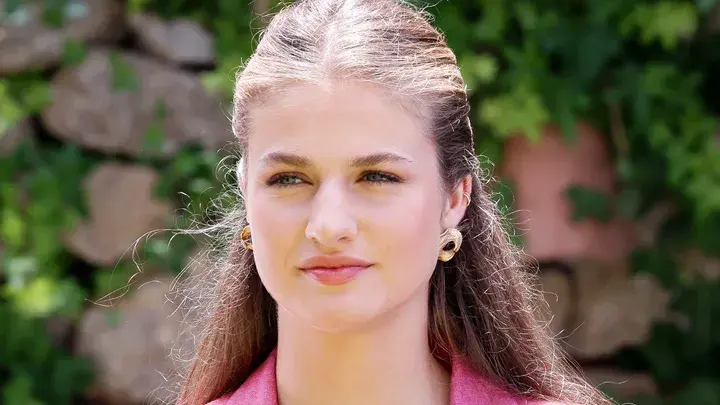
Princess Leonor’s daily life in 2026 is very different from the routine of an ordinary young woman. At 20 years old, the Princess of Asturias is balancing university education, official royal engagements, personal interests, family life, and the responsibilities that come with being the heir to the Spanish Crown.
After completing three years of military education across the Spanish Army, Navy, and Air and Space Force, Leonor is entering another important stage of her preparation for the throne. In April 2026, the Spanish Royal Household announced that she would study a four-year bachelor’s degree in Political Science at Universidad Carlos III de Madrid, beginning in September. The program includes political science, law, economics, sociology, history, humanities, and international relations.
Her university education will not mean stepping away from royal responsibilities. The Royal Household has specifically stated that Leonor will combine her university studies with her institutional commitments as heir, just as she did during her previous education and military training.
This makes her daily life a careful balance between being a university student and preparing to become Spain’s future queen.
What Is Princess Leonor’s Daily Life Like?
There is no official hour-by-hour schedule showing everything Leonor does each day. Much of her private routine remains private, which is understandable given her position. However, her public schedule and information released by the Royal Household give us a useful picture of the main areas that shape her life.
Her routine generally revolves around several priorities:
- University education
- Royal and institutional commitments
- Physical fitness
- Military responsibilities and ceremonies
- Reading and personal study
- Family time
- Cultural interests
- Preparation for her future constitutional role
Her routine has also changed significantly over the past few years. From 2023 to 2026, military training was one of the biggest parts of her schedule. She moved between Spain’s Army, Navy, and Air and Space Force academies, lived alongside fellow cadets, completed naval training, learned to fly, and undertook parachuting training. Now that this phase has ended, her daily routine is becoming more academic and institutional.
From military cadet to university student
The transition is significant. During military training, Leonor’s days were structured around military instruction, physical conditioning, exercises, and academy responsibilities. Her next stage will involve lectures, university assignments, independent study, and royal engagements. This means her daily life will likely have a more traditional student structure, although with considerably more responsibilities than most university students.
Education and Her New University Routine
Education is one of the most important parts of Princess Leonor’s current life. The Royal Household confirmed that she will study political science at Universidad Carlos III de Madrid beginning in September 2026. The four-year degree will be taught at the university’s Getafe campus. The degree is particularly relevant to her future because it covers subjects that can help her understand Spain’s political and institutional system.
Subjects connected with her future role
Her university program includes areas such as:
- Political science
- Law
- Economics
- Sociology
- History
- Humanities
- International relations
These subjects can give her a broad understanding of the institutions and societies she will eventually represent as monarch.
A university routine with royal responsibilities
Leonor will not simply attend classes and return home like a typical student. The Royal Household has made clear that she will combine her academic education with her institutional commitments. This arrangement has already been part of her life.
During her time at UWC Atlantic College in Wales, she completed her International Baccalaureate while remaining connected to the Spanish royal family. During her military training, she similarly combined academy life with official events. The same pattern will continue at university.
Her likely academic day
Although her exact private timetable is not publicly confirmed, university life can reasonably involve:
Morning:
Classes, lectures, and academic activities.
Afternoon:
Further classes, study, university work, or institutional commitments depending on the day.
Evening:
Private study, reading, family time, or personal interests.
Her actual schedule will naturally vary according to the university calendar and the Royal Household’s official program.
It is important not to present an unofficial timetable as a confirmed description of her private life.
Why university matters
Leonor’s university education is more than another academic qualification.
She is preparing for a constitutional role that requires knowledge of:
- Government
- International relations
- Law
- Public institutions
- Economics
- Social issues
- European affairs
Her Political Science degree therefore complements the military and constitutional preparation she has already received.
Royal Duties and Official Responsibilities
Another major part of Princess Leonor’s daily life is her increasing participation in official events. As heir to the Spanish Crown, she is gradually taking on more institutional responsibilities while King Felipe VI remains the reigning monarch. Her public engagements can include ceremonies, awards, military events, cultural occasions, speeches, and meetings.
In 2026, for example, Leonor has continued appearing at important national and institutional events. Her role at the Princess of Girona Awards has been particularly significant because the event is closely associated with her title and focuses on young people’s achievements.
Public speaking
Public speaking is becoming an increasingly important part of Leonor’s role. She has delivered speeches at major royal and institutional occasions, often addressing subjects such as the following:
- Young people
- Education
- Culture
- Innovation
- Social responsibility
- Spain’s future
- International cooperation
This is an important part of her preparation because a future monarch needs to communicate effectively with different audiences.
Official ceremonies
Leonor’s public responsibilities can also involve formal ceremonies.
These may include:
- Military events
- National celebrations
- Award ceremonies
- Diplomatic occasions
- Institutional visits
- Cultural events
Her schedule therefore changes depending on the national calendar. Some days may be primarily academic, while others can involve official travel, speeches, or ceremonial responsibilities.
Learning through public service
These appearances are not simply about visibility. They give Leonor practical experience in representing the Crown.
She learns how to:
- Address different audiences
- Meet government officials
- Interact with young people
- Represent Spanish institutions
- Participate in ceremonies
- Communicate with international figures
- Handle formal occasions
Each engagement contributes to her long-term preparation.
How She Balances Study and Public Life
One of the most interesting aspects of Princess Leonor’s daily life is the need to balance two demanding identities.
She is simultaneously:
A university student
and
The heir to the Spanish Crown. The Royal Household has explicitly said that Leonor’s university education will be combined with her institutional commitments. This means she will need to manage her time carefully.
Academic responsibilities
University life brings its own demands. She will need to attend classes, complete assignments, prepare for examinations, read academic material, and participate in university activities. Political science can be particularly reading-intensive because it covers complex subjects involving political systems, history, law, economics, and international affairs.
Royal responsibilities
At the same time, some official commitments cannot simply be moved around a university timetable. National ceremonies, international events, royal meetings, and major institutional occasions may require her presence. This makes time management especially important.
A different kind of preparation
Her earlier military education taught her discipline in a very direct way. Military life required her to follow schedules, complete demanding physical training, work with other cadets, and meet institutional expectations. Those habits may also help her manage university life. Her experience as a military cadet has therefore given her preparation that extends beyond military knowledge.
It has also developed:
- Discipline
- Time management
- Responsibility
- Teamwork
- Resilience
- Adaptability
These qualities can be useful as she moves into university and increasingly visible royal duties.
Fitness, Sports, and Personal Interests
Physical activity remains another important part of Leonor’s life. Before her military training, Spanish media reported that she enjoyed several sports, including skiing, tennis, volleyball, horse riding, swimming, basketball, and badminton. Her three years in the military added a much more demanding level of physical preparation. She completed training across all three branches of Spain’s Armed Forces and took part in aviation and parachuting activities.
Military fitness
Her military training included physical conditioning alongside technical and academic instruction. In 2026, she completed the Basic Parachuting Course and also undertook aviation training at the Academia General del Aire y del Espacio. These experiences were considerably more demanding than recreational sport.
Returning to a more normal student routine
With her military education completed, Leonor may have more flexibility to return to some of her personal interests. However, there is no public evidence showing exactly how often she currently practises each sport. Her private schedule is not fully disclosed. What is known is that sports have been a long-standing part of her life, while her recent military experience has significantly strengthened her physical training. For more on her interests outside official duties, Princess Leonor’s Favourite Hobbies: What She Enjoys explores her reported interests in reading, music, ballet, cinema, sports, astronomy, and other activities.
Reading and cultural interests
Reading is another interest that has frequently been associated with Leonor. Spanish media have reported that she enjoys literature, cinema, music, and other cultural activities. These interests can provide a quieter balance to the public nature of her life. For someone who spends considerable time at ceremonies and public events, private hobbies can offer valuable personal space.
Family Time and Private Life
Despite her public position, family remains an important part of Princess Leonor’s life. She is the eldest daughter of King Felipe VI and Queen Letizia and the older sister of Infanta Sofía. The Spanish royal family has traditionally presented itself as a close family unit during holidays and selected public occasions.
Time with her parents
Leonor’s parents have played an important role in her preparation. King Felipe VI has personal experience of military training and royal responsibilities, while Queen Letizia has been closely involved in her daughters’ education and development. Leonor’s relationship with her father is particularly relevant to her military preparation. Felipe VI completed military training across Spain’s armed forces before becoming king. Leonor’s own three-service military education followed a similar broad model.
Her relationship with Infanta Sofía
Leonor and Sofía have grown up together while experiencing an unusually public childhood.
They have shared:
- Family holidays
- School experiences
- Sporting activities
- Cultural outings
- Public ceremonies
Sofía has also studied at UWC Atlantic College in Wales, following a similar international educational path to her sister.
Family holidays
The Spanish Royal Family often spends part of the summer in Mallorca.
During August 2026, the family was photographed together in Mallorca, including King Felipe VI, Queen Letizia, Leonor, Sofía, and Queen Sofía.
These occasions offer a glimpse of a more relaxed side of the family.
However, even during holidays, the royal family remains subject to significant public attention.
A More Independent Life as Spain’s Future Queen
Princess Leonor’s daily life is becoming more independent as she gets older. At 20, she is no longer the child who appeared beside her parents at royal ceremonies. She has completed an international secondary education and three years of military training and is now preparing for university. Her public responsibilities are also increasing.
From daughter of the King to heir
This transition is important. When Leonor was younger, most royal appearances involved her parents. Today, she increasingly appears in her own capacity as Princess of Asturias. She has delivered speeches, attended major ceremonies, participated in military events, and represented the Crown at important occasions.
Her daily life reflects her future
The different parts of her routine are connected. Her education prepares her intellectually. Her military training prepares her for her future relationship with the Armed Forces. Her public appearances teach her institutional representation. Her languages and international education help her communicate across cultures. Her hobbies and family life provide a personal balance. Together, these experiences form a long-term preparation for becoming queen.
A young woman under unusual expectations
Leonor’s life is not completely private. Her appearance, education, friendships, hobbies, and public activities attract considerable media interest. At the same time, the Royal Household does not publish every detail of her personal routine. This means much of what is described as her “daily life” should be understood as a combination of publicly documented activities and carefully reported background information. It is important to avoid treating speculation about her private routine as established fact.
Frequently Asked Questions
1. What is Princess Leonor’s daily routine?
There is no complete official daily timetable for Leonor. Her routine in 2026 revolves around university education, institutional commitments, personal study, physical activity, and family life. The exact schedule varies depending on her university calendar and royal engagements.
2. Where will Princess Leonor study in 2026?
Leonor will study political science at Universidad Carlos III de Madrid. Her four-year degree begins in September 2026 and includes political science, law, economics, sociology, history, humanities, and international relations.
3. Does Princess Leonor have royal duties while studying?
Yes. The Spanish Royal Household has confirmed that Leonor will combine her university education with her institutional commitments as heir to the Crown.
4. What did Princess Leonor do before university?
Before beginning university, Leonor completed an International Baccalaureate at UWC Atlantic College in Wales and then completed a three-year military education program covering Spain’s Army, Navy, and Air and Space Force. (Wikipedia)
5. Does Princess Leonor have free time?
She presumably has private time away from official engagements, but the exact details of her personal schedule are not publicly disclosed. Reported interests include reading, music, cinema, sports, and other cultural activities.
Conclusion
Princess Leonor’s daily life in 2026 is built around a careful balance of education, royal responsibilities, personal interests, family, and preparation for her future as Queen of Spain. Her life has changed significantly since childhood. She has moved from an international school in Wales to three years of demanding military education and is now beginning a four-year political science degree at Universidad Carlos III de Madrid. The Spanish Royal Household has confirmed that her university education will continue alongside her institutional responsibilities as heir.
Her routine is therefore not simply that of a university student. One day may involve lectures and academic work, while another may include an official ceremony, a speech, a military event, or a meeting connected with the Spanish Crown. Outside these responsibilities, Leonor has a range of personal interests. Reading, music, sports, cinema, and family activities provide a more private side to her otherwise highly structured life. Her three years of military training have also given her an unusual level of physical and institutional preparation for someone her age. As she moves through university and takes on more responsibilities, her daily routine will likely continue to evolve.
What makes Princess Leonor’s life particularly interesting is the combination of ordinary young-adult experiences and extraordinary constitutional expectations. She is preparing for university; developing personal interests; spending time with her family; and building friendships, like many people her age, while simultaneously preparing for one of the most important public roles in Spain. That balance will remain a defining part of her life as she moves closer to the Spanish throne.
References
- Casa de S.M. el Rey: Official announcement of Princess Leonor’s university education and Political Science degree. (Casa Real)
- EFE: Reporting on Leonor’s transition from military education to university. (EFE Noticias)
- ¡HOLA!: Reporting on Leonor’s transition after military training and university plans. (hola.com)
- The Objective: Reporting on Leonor’s reported routine, reading, languages, and lifestyle. (theobjective.com)
- People: Coverage of the Spanish Royal Family’s 2026 Mallorca appearance.