
Table of Contents
- Introduction
- Infanta Sofia’s Early Education in Madrid
- Santa María de los Rosales School
- UWC Atlantic College in Wales
- Her University Education at Forward College
- Why Her Education Is Important for Her Future
- Frequently Asked Questions
- Conclusion
- References
INTRODUCTION
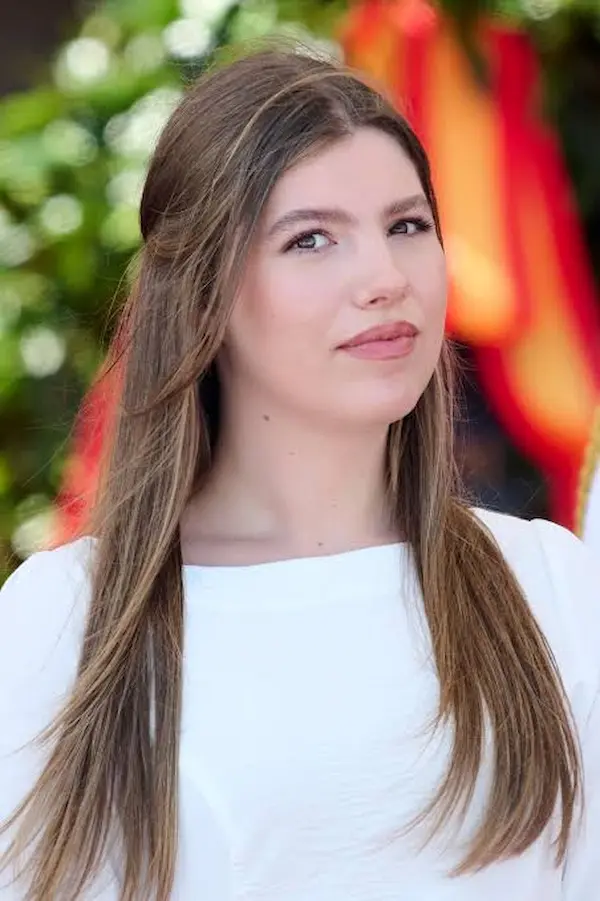
Infanta Sofia’s education and school journey has taken her from a private school in Madrid to an international boarding school in Wales and, more recently, to university studies across Europe. As the younger daughter of King Felipe VI and Queen Letizia, Sofia has received an education designed to give her academic knowledge, independence, international experience, and preparation for her future role within the Spanish royal family.
Unlike her older sister, Princess Leonor, Sofia does not have the same constitutional responsibilities because Leonor is the heir to the Spanish throne. This has allowed Sofia to follow a different educational path. Her studies have increasingly focused on international education, politics, and global affairs.
In 2026, Sofia is continuing her university degree at Forward College. After completing her first year in Lisbon, Portugal, she is moving to Paris for the second year of her three-year programme. (Servimedia)
Infanta Sofia’s Early Education in Madrid
Infanta Sofia began her education in Spain, following a similar early academic path to her sister Princess Leonor.
Her first educational experience was at the Escuela Infantil Guardia Real, a nursery associated with the Spanish Royal Guard. She began attending the institution in 2009. (Wikipedia)
In September 2010, Sofia started primary school at Santa María de los Rosales School in Madrid.
The school was already familiar to the Spanish royal family. Princess Leonor had attended the same institution, while King Felipe VI also studied there during his childhood and teenage years.
Sofia spent many years of her early education at the Madrid school.
Her education there included the following:
- Early childhood education
- Primary education
- Secondary education
- Academic subjects
- Languages
- Sports and extracurricular activities
- Preparation for international studies
She completed her compulsory secondary education in June 2023 before moving abroad for the next stage of her academic journey.
A familiar environment
Studying in Madrid allowed Sofia to remain relatively close to her family during her childhood.
She grew up alongside Princess Leonor while both sisters attended the same school for part of their education.
However, the royal family eventually decided that Sofia would continue her studies abroad, giving her an opportunity to experience a different educational system.
Santa María de los Rosales School
Santa María de los Rosales played an important role in Sofia’s childhood education. The private school is located in Madrid and has a long connection with the Spanish royal family. Both Leonor and Sofia attended the institution, and King Felipe VI was also educated there. For Sofia, the school provided the foundation for her later international education. She completed her primary and secondary education there before leaving Spain in 2023.
Preparing for international education
Her years at Santa María de los Rosales were important because they gave her a strong academic foundation before she entered the International Baccalaureate programme. Although details about Sofia’s individual grades have not been publicly released, her successful admission to UWC Atlantic College demonstrates that she completed the required selection process. The move from Madrid to Wales was a significant change. Instead of living with her family and attending a day school, Sofia would become a boarding-school student in another country. This experience would give her greater independence at a relatively young age.
UWC Atlantic College in Wales
One of the most important stages in Infanta Sofia’s education was her time at UWC Atlantic College in Wales. In February 2023, the Spanish Royal Household officially announced that Sofia would follow the International Baccalaureate programme at the Welsh college, just as Princess Leonor had done previously. (casareal.es) Sofia began the two-year programme in 2023 and graduated in May 2025.
International Baccalaureate
The International Baccalaureate programme gave Sofia a broad academic education. The official announcement from the Royal Household explained that the programme included both science and humanities subjects.
It also included:
- Theory of Knowledge
- An independent research project
- Creative activities
- Sports
- Community service
- International student activities
This type of education is particularly different from a conventional school curriculum because students are expected to develop academic knowledge alongside creativity, community involvement, and international awareness.
Life as a boarding student
Sofia also lived at the school as a residential student. This was an important step toward independence. She lived and studied alongside students from different countries and cultural backgrounds. The experience gave her an opportunity to develop relationships outside Spain and become more comfortable in an international environment. For a member of the Spanish royal family, this kind of experience can be especially valuable. She could experience everyday student life while still maintaining her connection with the Spanish Crown.
Activities beyond the classroom
Her education at UWC Atlantic College was not limited to traditional academic subjects. The programme included activities such as:
- Theatre
- Music
- Art
- Sports
- Community service
- Environmental projects
- Support activities for local communities
The Spanish Royal Household specifically highlighted these elements when announcing her admission. This broad approach helped prepare Sofia for university and adult life.
Graduation in 2025
Sofia completed her International Baccalaureate in 2025. Her parents, King Felipe VI and Queen Letizia, attended her graduation ceremony in Wales. Her graduation marked the end of her secondary education and the beginning of a new stage. Unlike Leonor, who moved into military training after finishing the International Baccalaureate, Sofia chose to continue directly into university education.
Her University Education at Forward College
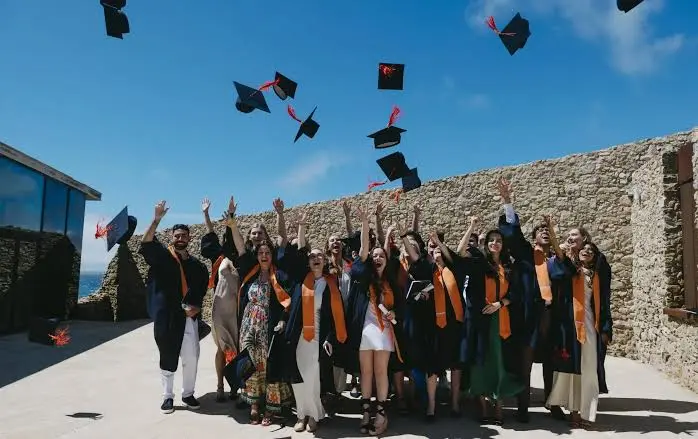
The next major step in Infanta Sofia’s education came in July 2025, when the Spanish Royal Household confirmed that she would study political science and international relations at Forward College. The three-year degree is designed as an international programme across three European cities:
- Lisbon
- Paris
- Berlin
Sofia began her first university year in Lisbon in September 2025.
Political Science and International Relations
Her choice of degree is particularly interesting because these subjects are closely connected with public institutions and international affairs. Her studies cover areas related to:
- Political science
- International relations
- History
- Philosophy
- Business
- European politics
- Global affairs
The education can give her a strong understanding of political systems and international relationships, which could be useful in her future public responsibilities.
Why Forward College?
Forward College offers a different university model from a traditional large university. Students move between European cities during the degree, allowing them to gain international experience while studying. Sofia’s programme began in Lisbon. For her second year, she is moving to Paris, with Berlin planned as the location for the third year. This means that by the time she completes her degree, she will have experienced university life in three different European capitals.
Life in Lisbon
Sofia’s first university year represented another step toward independence. She lived in a student environment and studied alongside young people from different nationalities. The experience allowed her to enjoy aspects of ordinary university life while maintaining the responsibilities associated with being a member of the Spanish royal family. Recent reporting confirms that she completed her first year in Lisbon and is preparing to continue her studies in Paris during the 2026-27 academic year.
Moving to Paris
Paris is the next stage of Sofia’s academic journey. Her move to the French capital gives her another international environment in which to continue studying political science and international relations. The move also means she will remain relatively close to Spain while studying abroad. Her education therefore combines academic learning with international exposure, independence, and cultural experience.
Why Her Education Is Important for Her Future
Infanta Sofia’s education is important because her future role within the Spanish Royal Family is different from that of Princess Leonor. Leonor is the heir and must receive extensive preparation for eventually becoming Queen of Spain. Sofia, as second in line, does not have the same constitutional responsibilities. This has allowed her to choose an academic route that reflects her own interests.
A focus on international affairs
Her political science and international relations degree could be particularly useful if she takes on greater institutional responsibilities later in life. The subjects can help her understand:
- Government systems
- International diplomacy
- European institutions
- Political decision-making
- Global relations
- Social and economic issues
Her international education also gives her experience living in several different countries.
Developing independence
Another major benefit of Sofia’s education is independence. She has already spent two years at a boarding school in Wales and one year studying in Lisbon. Her upcoming move to Paris continues this pattern. These experiences require students to manage their own schedules, academic responsibilities, social relationships, and everyday life. For Sofia, this is an important part of becoming an independent adult while remaining connected to the royal family.
Different from Princess Leonor
The educational paths of the sisters are now clearly different.
Princess Leonor:
- International Baccalaureate
- Military education
- Army training
- Naval training
- Air and Space Force training
- Political Science degree in Madrid
Infanta Sofia:
- Spanish school education
- International Baccalaureate
- Political Science and International Relations
- University studies across Lisbon, Paris, and Berlin
Neither path is necessarily more important than the other. They simply reflect the different constitutional positions of the two sisters.
Frequently Asked Questions
1. Where did Infanta Sofia go to school?
Infanta Sofia attended Santa María de los Rosales School in Madrid for her early education. She later studied the International Baccalaureate at UWC Atlantic College in Wales from 2023 to 2025.
2. What is Infanta Sofia studying at university?
Sofia is studying political science and international relations at Forward College. Her three-year programme takes place across Lisbon, Paris, and Berlin.
3. Where is Infanta Sofia studying in 2026?
In 2026, Sofia is moving to Paris for the second year of her university programme after completing her first year in Lisbon. Her third year is expected to take place in Berlin.
Conclusion
Infanta Sofia’s education and school journey reflects a carefully planned transition from traditional schooling in Madrid to international education and university life across Europe.
She began her education in Spain, attending the Escuela Infantil Guardia Real before joining Santa María de los Rosales School. She later followed her sister Leonor’s path to UWC Atlantic College in Wales, where she completed a two-year International Baccalaureate programme. Her decision to study political science and international relations at Forward College has taken her into another international chapter. After beginning in Lisbon, she is now preparing for her second year in Paris, with Berlin planned for the final year.
The combination of academic study, international experience, and independent living is giving Sofia a broad educational background. While she does not face the same constitutional preparation as Princess Leonor, her education can still play an important role in her future position within the Spanish royal family.
Her journey is also notable because it gives her an opportunity to build an identity of her own. From her years in Madrid to boarding school in Wales and university life across European capitals, Sofia’s education has increasingly become international, independent, and focused on understanding the wider world.
References
- Casa de S.M. el Rey: Official announcement of Sofia’s International Baccalaureate studies at UWC Atlantic College. (casareal.es)
- EFE: Report on Sofia’s Political Science and International Relations degree at Forward College. (EFE Noticias)
- Servimedia: Details of her university programme and international education. (Servimedia)
- El País: Background on Sofia’s education and transition into adulthood. (El País)