
Table of Contents
- Introduction
- Princess of Asturias and the Spanish Line of Succession
- How Princess Leonor Became the Heir to the Crown
- Constitutional Rules Governing Royal Succession
- Princess Leonor’s Preparation for Her Future Role
- What Succession Means for Infanta Sofía
- Frequently Asked Questions
- Conclusion
INTRODUCTION
The Princess of Asturias succession is closely connected with Spain’s constitutional monarchy and the position of Princess Leonor as heir to the Spanish throne. Leonor, the elder daughter of King Felipe VI and Queen Letizia, holds the title Princess of Asturias because she is the current heir presumptive to the crown. Her position places her at the centre of Spain’s future monarchy.
Spanish royal succession is governed primarily by the country’s 1978 Constitution rather than by informal royal tradition alone. The Constitution establishes the hereditary succession to the Crown and sets out the order in which members of the royal family can inherit the throne. (Wikipedia)
As Princess Leonor continues her education, military training, and public duties, her preparation for the future has become an increasingly important part of the Spanish monarchy.
Princess of Asturias and the Spanish Line of Succession
The title ‘Princess of Asturias’ has a special meaning within the Spanish monarchy. It is traditionally associated with the heir to the Crown and is currently held by Princess Leonor. Leonor was born on October 31, 2005, to then-Prince Felipe and Letizia Ortiz. When her grandfather King Juan Carlos I abdicated in 2014, her father became King Felipe VI. Leonor consequently became first in line to the Spanish throne.
Her position is different from that of her younger sister, Infanta Sofía. Under the current constitutional succession system, Leonor comes before Sofía because Leonor is the elder daughter. The title ‘Princess of Asturias’ also connects Leonor with a long historical tradition. The heir to the Spanish Crown traditionally holds several titles connected with former kingdoms and territories of the Spanish monarchy.
Today, however, these titles have primarily constitutional and historical significance. The Royal Household describes the heir as receiving the dignity of Prince or Princess of Asturias, together with other traditional titles associated with the successor to the Crown.
Leonor’s role has become increasingly visible as she approaches adulthood and takes on more responsibilities. For a broader look at her current position, Leonor, Princess of Asturias in 2026: Her Royal Life and Role covers her education, public appearances, military preparation, and growing responsibilities within the Spanish royal family.
How Princess Leonor Became the Heir to the Crown
Princess Leonor’s position as heir was established from birth under Spain’s succession rules. When she was born in 2005, her father was the Prince of Asturias and heir to King Juan Carlos I. Leonor was therefore part of the direct line of succession from the beginning. Her position became even more important after Felipe VI became King of Spain in June 2014. At that point, Leonor became the direct heir to her father’s throne and received the title Princess of Asturias. Her younger sister Sofia remains next in the succession after Leonor.
This means the current immediate order is the following:
- Princess Leonor
- Infanta Sofía
- Further descendants and other eligible members according to the constitutional succession rules
The succession system is hereditary, but it is not simply based on the age of every member of the wider Royal Family. The Constitution establishes a specific order of succession. Leonor’s status therefore comes from both her position as Felipe VI’s elder daughter and the constitutional rules governing the Crown.
Her constitutional oath
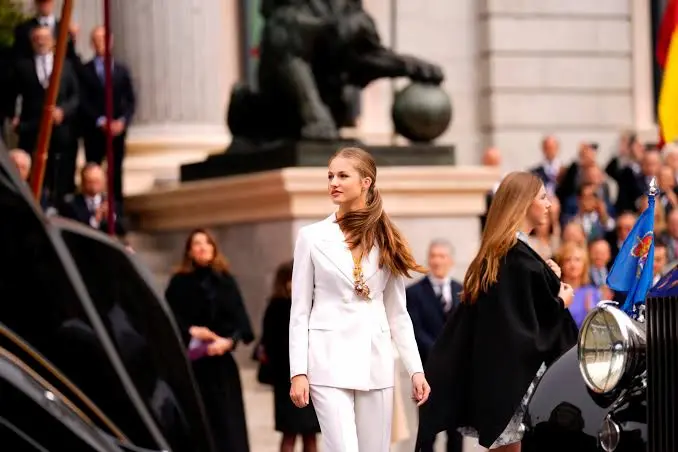
An important milestone occurred when Leonor turned 18 in October 2023. She swore allegiance to the Constitution and promised loyalty to the king before the Spanish Congress of Deputies. This ceremony was highly significant because it formally connected the heir with Spain’s constitutional system. The event also demonstrated that succession to the Spanish Crown involves constitutional responsibilities rather than simply a family inheritance.
Constitutional Rules Governing Royal Succession
The most important legal foundation for the Princess of Asturias succession is Article 57 of the Spanish Constitution. The Constitution establishes that the Crown of Spain is hereditary in the successors of King Juan Carlos I. It then sets out the order in which the Crown passes. Under the current wording, succession follows a system based on primogeniture, with older lines taking precedence over younger lines and older persons within the same line taking precedence over younger persons. The constitutional provision also contains a preference for males over females within the same degree of succession.
This means the current position of Leonor is particularly important. She is the elder child of King Felipe VI, so she is ahead of her younger sister Sofía in the succession. The rules also mean that if Leonor has children in the future, her descendants would occupy the relevant place in the succession according to the Constitution.
What happens when a monarch dies?
Succession does not require a separate election. When the reigning monarch’s reign ends, the crown passes according to the constitutional succession rules. The new monarch then undertakes the constitutional procedures required for the office. The heir also has an established role within the constitutional system. The Spanish succession therefore combines hereditary continuity with formal constitutional requirements.
Can the succession rules change?
The constitutional rules are not changed simply by a royal decision. Any fundamental change to the constitutional succession system would require the appropriate constitutional amendment process. This is important because discussions about changing the male-preference rule are ultimately constitutional matters rather than decisions that the Royal Family can make independently.
Princess Leonor’s Preparation for Her Future Role
Being heir to the Spanish throne involves much more than holding a title. Princess Leonor has received extensive preparation designed to help her understand the responsibilities she may eventually assume as queen. One of the most distinctive parts of her preparation has been her military education.
Between 2023 and 2026, Leonor trained across Spain’s Army, Navy, and Air and Space Force. Her military education included classroom instruction, physical training, leadership development, naval activities, aviation experience, and other forms of military preparation. This is significant because the Spanish Constitution gives the king important responsibilities in relation to the armed forces. Her education has also included constitutional knowledge, languages, international affairs, public speaking, and institutional experience.
University education
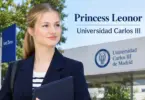
After completing her military training, Leonor is moving into university education. Her planned studies in political science at Universidad Carlos III de Madrid are particularly relevant to her future position.
A degree covering political science can help her understand the following:
- Constitutional institutions
- Government
- Political systems
- International relations
- Public administration
- Political history
- Contemporary society
Her academic preparation therefore complements the practical experience she has gained through military training and royal engagements.
Growing public responsibilities
Leonor is also gradually undertaking more official duties. She has represented the Royal Family at national ceremonies, international events, military occasions, and cultural engagements. Her public appearances give her experience in speaking to citizens and representing Spain. This gradual increase in responsibility is an important part of the succession process because the future monarch is expected to understand the country and its institutions before assuming the Crown.
What Succession Means for Infanta Sofía
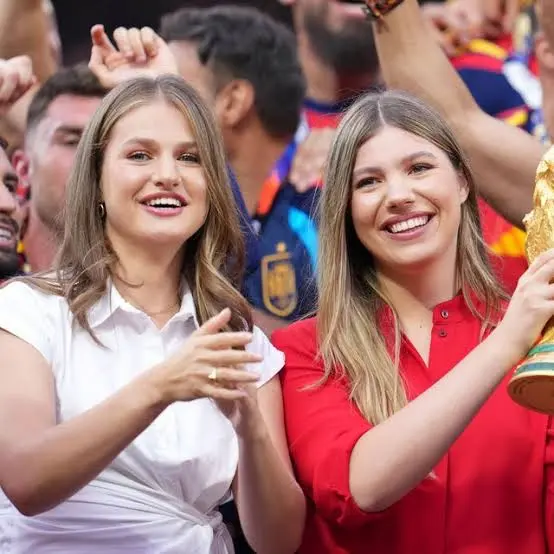
Infanta Sofía is currently second in line to the Spanish throne. Her position is directly connected with Princess Leonor’s place in the succession. Because Leonor is older, Sofía comes after her under the current constitutional rules. This does not mean Sofía has no role within the royal family. She has already begun developing an independent public profile through education and selected royal engagements. Her international education has included the International Baccalaureate at UWC Atlantic College in Wales, followed by university studies in political science and international relations at Forward College. Her path is different from Leonor’s because she is not the heir.
A supporting role
Sofía may eventually support Leonor in a similar way that other non-heir members of European royal families support their reigning monarchs.
Her future could involve the following:
- Cultural engagements
- Educational initiatives
- International activities
- Social causes
- Charity work
- Selected official ceremonies
However, her exact future responsibilities cannot be predicted with certainty. The important distinction is that Leonor is being prepared specifically to become monarch, while Sofía has considerably more flexibility in developing her education and career.
Why the succession order matters
The current order provides clarity about who would inherit the Crown.
Leonor is first.
Sofía follows her.
This means that, under the present constitutional arrangement, Sofía would become heir only if Leonor were no longer in the line of succession and there were no eligible descendants of Leonor who took precedence. For now, Leonor’s position as Princess of Asturias remains firmly established.
Frequently Asked Questions
1. Why is Princess Leonor the heir to the Spanish throne?
Princess Leonor is the elder daughter of King Felipe VI. Under Spain’s constitutional succession rules, she is first in line to inherit the crown and therefore holds the traditional title Princess of Asturias.
2. Is Infanta Sofía next after Princess Leonor?
Yes. Infanta Sofía is currently next in line after her older sister Leonor. Her exact position is determined by the constitutional rules governing hereditary succession.
3. What does ‘Princess of Asturias’ mean?
‘Princess of Asturias’ is the traditional title given to the heir apparent or heir presumptive to the Spanish Crown. Leonor received the title after her father became King Felipe VI in 2014.
Conclusion
The Princess of Asturias succession is an important part of Spain’s constitutional monarchy. Princess Leonor’s position as heir is based on Spain’s Constitution and her place as the elder daughter of King Felipe VI and Queen Letizia.
Her role goes beyond a ceremonial title. Since becoming Princess of Asturias, Leonor has received extensive preparation for the possibility of becoming queen. Her military education, constitutional oath, public engagements, languages, and planned university studies all form part of that preparation. Infanta Sofía occupies the next position in the succession and has developed a different path. Her international education and selected public engagements are helping her establish an independent role while remaining a member of the royal family.
The future of the Spanish Crown therefore depends on a clearly defined constitutional succession system. For now, Princess Leonor stands at its centre as the heir to King Felipe VI. As her public responsibilities continue to grow, the transition from Princess of Asturias to future Queen will become one of the most closely followed developments in the Spanish royal family.